
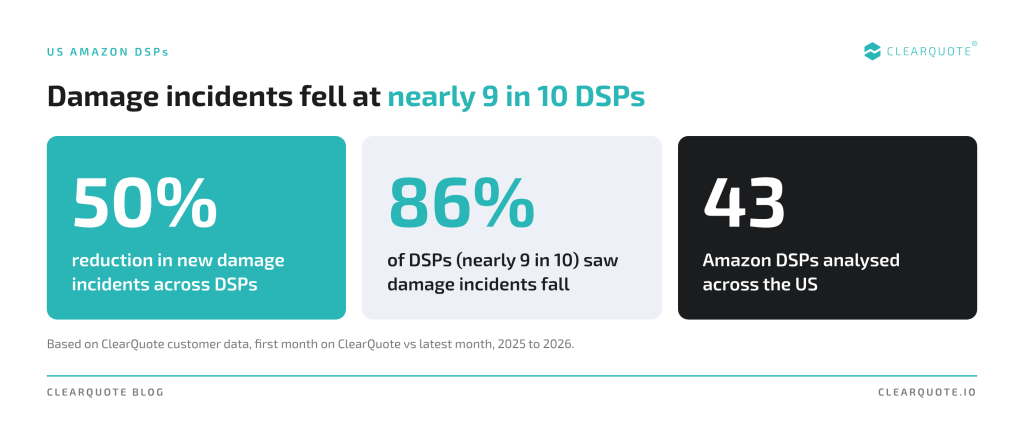
Unreported damage costs Amazon DSPs in repairs, rental return charges and vans off the road. Some DSPs are countering it with AI damage detection at every van handover: a record of what’s new on the van, when it appeared and who had it last. The result so far is a 50% average damage reduction across our US Amazon DSP customers.
 Why Does Van Damage Go Unreported at Amazon DSPs?
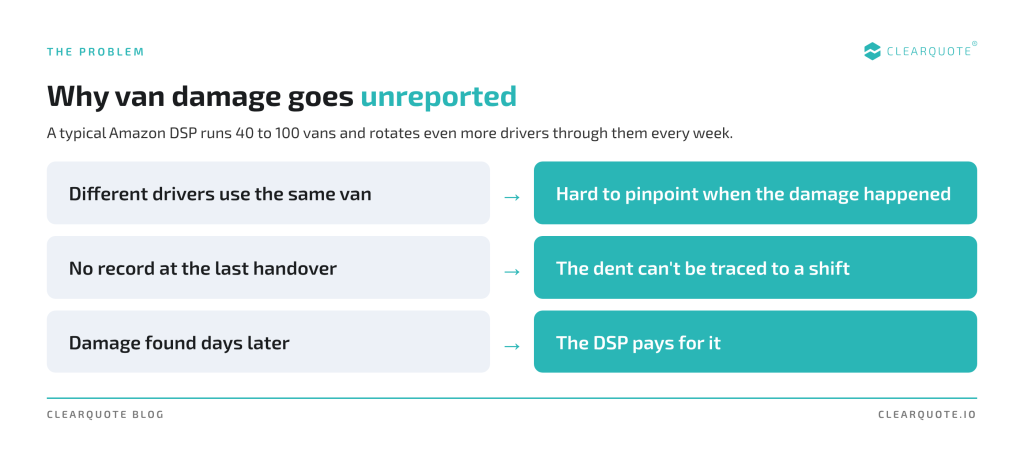
A typical Amazon DSP runs 40 to 100 vans and rotates even more drivers through them every week. When a van comes back with a new dent, there’s rarely a clear record of how it looked at the last handover.
- Different drivers use the same van → hard to pinpoint when the damage happened
- No record at the last handover → the dent can’t be traced to a shift
- Damage found days later → the DSP pays for it
The DSP pays in repair bills, in rental return charges, and in vans off the road when small damage gets worse. Manually checking DVIC photos can’t keep up at that scale either. Someone has to open every image, compare it with the van’s last set and decide what’s changed.
How Does AI Damage Detection Work at Handover?
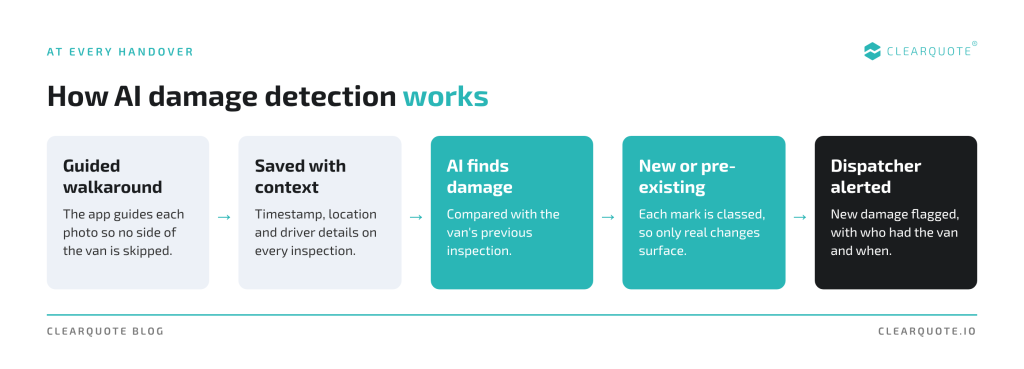
Drivers do a guided walkaround on their phone at handover. The app guides each photo so no side of the van gets skipped, and every inspection is saved with a timestamp, location and driver details.
ClearQuote’s AI then finds the damage in those images and compares it with the van’s previous inspection. Each mark is classed as new or pre-existing, and the fleet manager or dispatcher gets an alert when something new turns up. Nobody has to sort through photos to find out what changed, when, or who had the van.
 ClearQuote also connects with Fleetio, Geotab, Webfleet and UniQore, so damage records can sit alongside the fleet data a DSP already uses.
How Much Has Damage Fallen for DSPs Using ClearQuote?
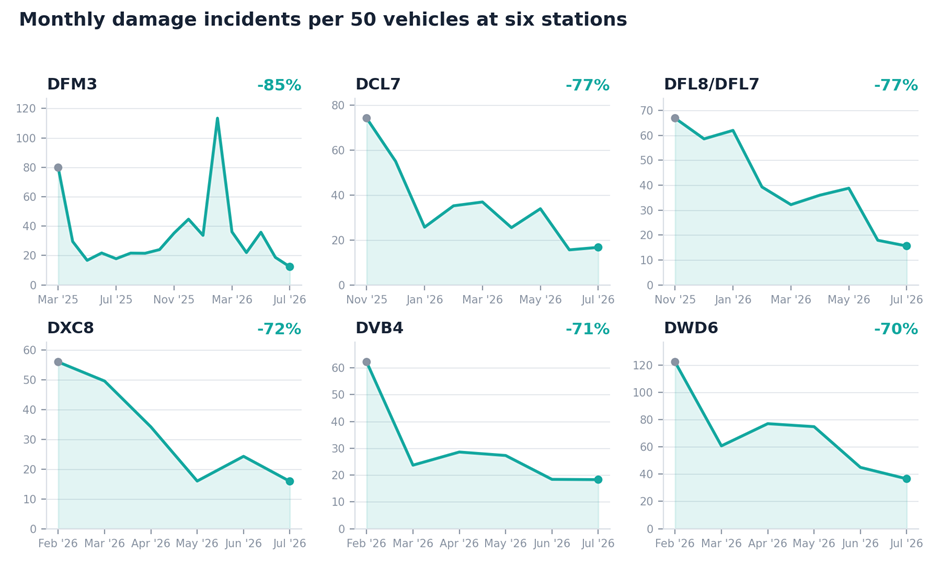
The headline figure is a 50% average damage reduction across our US Amazon DSP customers. Across 43 Amazon DSPs in the US, new damage incidents fell by around 50% from each DSP’s first month on ClearQuote to its latest month, and 86% of DSPs (nearly 9 in 10) saw a reduction.
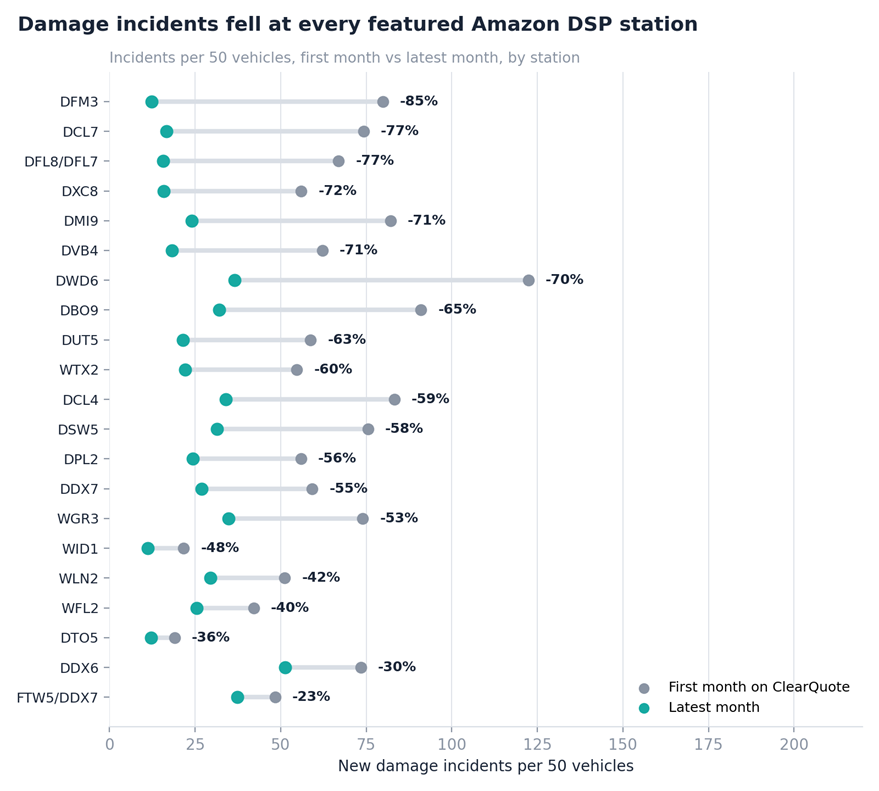 The drop holds month after month rather than in one good month. A DSP at DFM3 cut new damage incidents by 85%, and DSPs at DCL7 and DFL8/DFL7 by 77% each.
 .
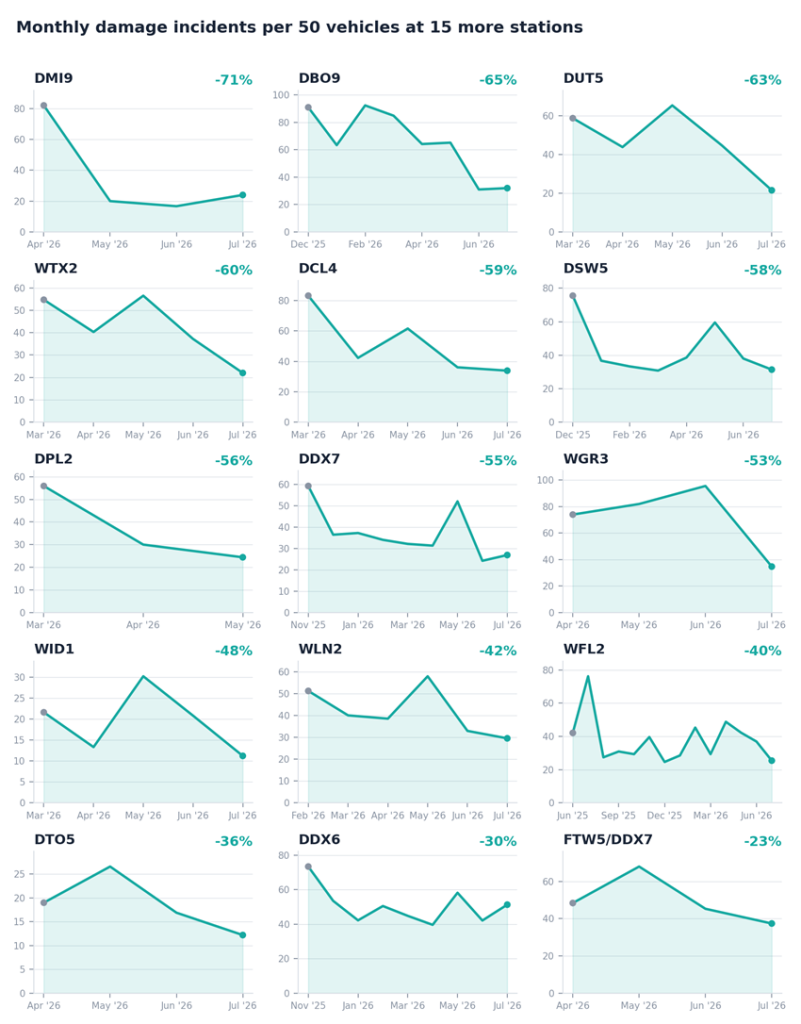
The same pattern shows up across the other featured stations. Every one of them ended with fewer damage incidents than it started with, from DMI9 (−71%) and DBO9 (−65%) to FTW5/DDX7 (−23%).
Admin time fell too: 90% less admin time spent reviewing inspection images.
Part of the change is behaviour. Once every new mark is tied to a date and a handover, drivers know the van’s condition is on record, and damage rates fall.
Bridge Delivery, a DSP at the DDF1 station in Lewisville, Texas, runs 40 Ford Transit and RAM Promaster vans shared across drivers through the week. Before ClearQuote, manual inspections were slow and inconsistent, and damage was hard to trace to a driver. With daily guided image capture and AI review, dispatchers now get notified of new damage and admin review time has dropped.
Based on ClearQuote customer data.
What Does Less Damage Mean for an Amazon DSP?
Lower repair bills and fewer surprises when vans go back to the rental company. It also keeps more vans on the road.
Processing DVIC images using ClearQuote AI is now an option, depending on the quality of the images captured.
Amazon DSPs that want to see this on their own fleet can request a free trial at amazondsp@clearquote.io.